Valuing Student Voice in the Age of AI: A Toolkit and Invitation

By Rachel Roberson

Note from the Editor: In this post, we welcome a contribution from a kindred literacy initiative: KQED’s education program. Like ERWC, KQED offers free curriculum and instructional resources to classroom teachers. The Nor Cal nonprofit’s latest offering is a 15-lesson unit that develops students’ “narrative agency”–their power to tell stories that matter to them. If you’re teaching one of ERWC’s many modules that focus on narrative writing (including new middle school modules such as Booked, They Called Us Enemy, When You Trap a Tiger, and Living Beyond Borders), this is the post for you! Read on to learn about a special opportunity to help field test these lessons.


What if AI literacy started by focusing on the human in the loop rather than the machine?

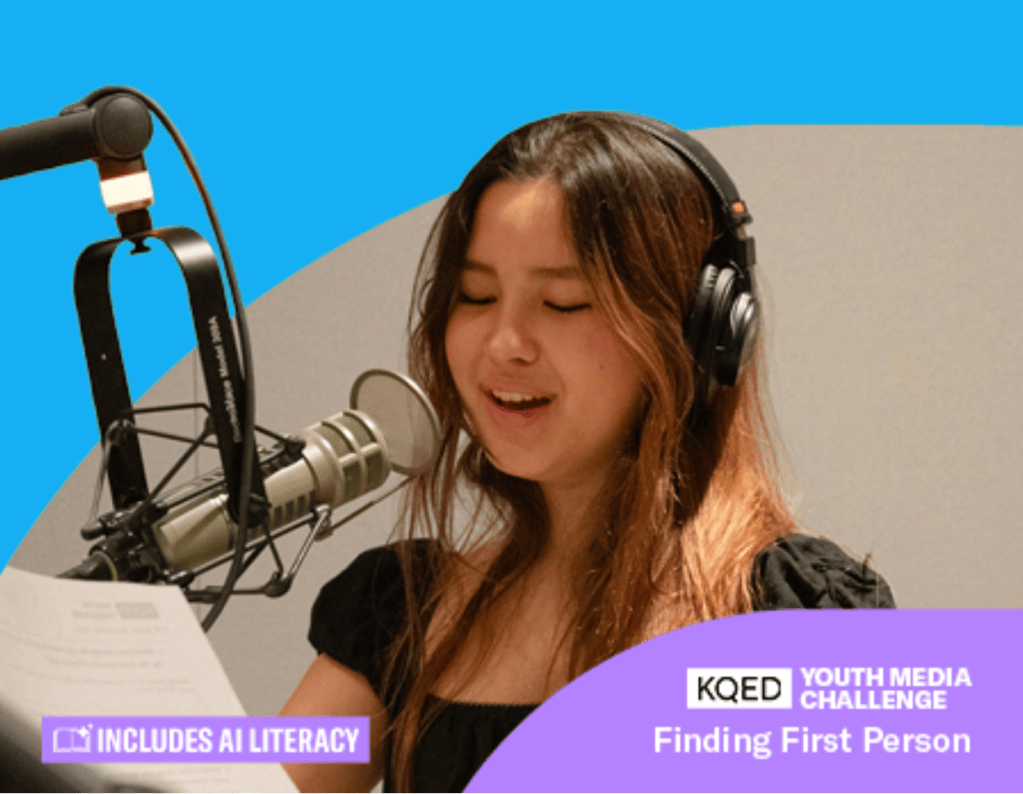
KQED, the PBS and NPR member station in the San Francisco Bay Area, has long championed student voice through our Youth Media Challenge and online showcase. When thinking about how to meet the AI moment with youth voice at the center, we started with the importance of putting process back into learning. Process too often gets pushed aside despite our best intentions. But now AI can create any product we ask students to do, allowing students to circumvent the process of creation entirely. Concerns around academic integrity and AI use are valid. At the same time, this โ€œprocess crisisโ€ is also an opportunity to return our focus to centering the writing and creation process in a way thatโ€™s meaningful to students. The Finding First Person curriculum models one way to do this with daily process reflections and by asking students to apply their learning by reflecting on narrative agency themes and recording their actual voices in an audio or video personal narrative project.

Co-created by high school students and KQED, the unit centers the concept of narrative agency, which we define as the human ability to make choices based on the uniqueness and importance of our individual experiences, values, ideas, perspectives and knowledge, especially when working with AI chatbots designed to simulate our voices in ways that could take over the creative process.

In the unit, students unpack the concept of narrative agency and the intersection of self and AI through values and identity exploration, as well as reading, writing and discussing relevant AI topics. The unit is neither pro- nor anti-AI. Instead, it seeks to openly discuss AI in society and affirm students’ voices and viewpoints. Students apply their learning with a multimedia personal narrative media project, writing a script and creating an audio essay or short film related to AI, agency or voice.

Usually, AI literacy is taught by focusing on AI tools and how to use them. But in a world where AI can increasingly imitate human expression, it makes just as much sense to start with the human using the tool, especially in the humanities. The Finding First Person unit is KQEDโ€™s response to the question: How do we as English teachers help students recognize, value, and retain ownership of their own unique voices in our AI world?

The Finding First Person unit and teacher toolkit is available publicly. If you are interested in participating in the field test next semester, complete the application by Nov. 30.

You are welcome to explore and use the unit materials, even if you choose not to apply for the field test. All resources are in Google docs and can be modified for use in your classroom or educational setting.

KQEDโ€™s education team is seeking high school English teachers to field test a 3-week, project-based curriculum unit titled โ€œFinding First Person: Telling My Story in the Age of AI.โ€ This opportunity includes a $800 stipend for participating teachers.

Apply by November 30.
Rachel Roberson, KQED Educationโ€™s senior program manager, is an experienced teacher leader and curriculum content developer who has served as a classroom teacher and administrator at public, charter and international schools. Rachel specializes in professional learning facilitation and curriculum development, strategy and implementation. At KQED, she works to connect educators and students to KQED online education sites, KQED Teach and the Youth Media Challenge, by creating humanities curriculum and professional learning content, supporting product development; championing youth-created media in and out of the classroom, and leading projects and partnerships focused on teachers and classroom learners. Rachel is a graduate of Northwestern University Medill School of Journalism and has a Master of Arts in Teaching Leadership from St. Mary’s College of California. Before she was a teacher, she was a newspaper reporter in the Bay Area.

Community News

The current image has no alternative text. The file name is: lori-campbell-e1767818164266.png

By Lori Campbell

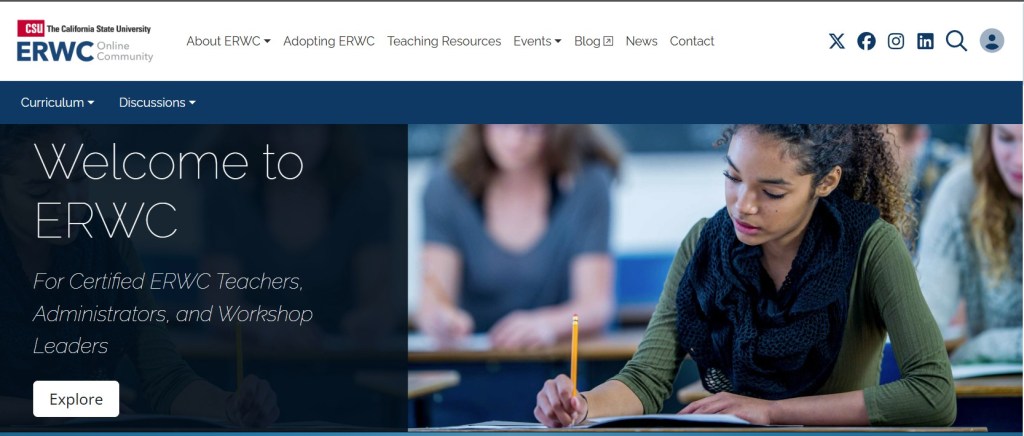
You may not realize that our online community resource just received a facelift! Have you seen it this year? Our online community is your one-stop shop for modules, teaching resources, and ideas from colleagues.ย https://writing.csusuccess.org/


Whatโ€™s new?

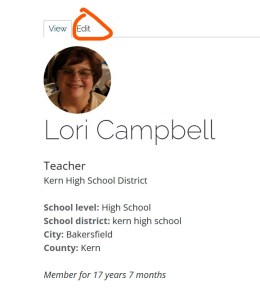
Member Information: You can now update your school site, email address, and password. Just select “My Account” on the right and then click the โ€œeditโ€ tab to change information. Make sure you provide current information to receive bulletin updates.

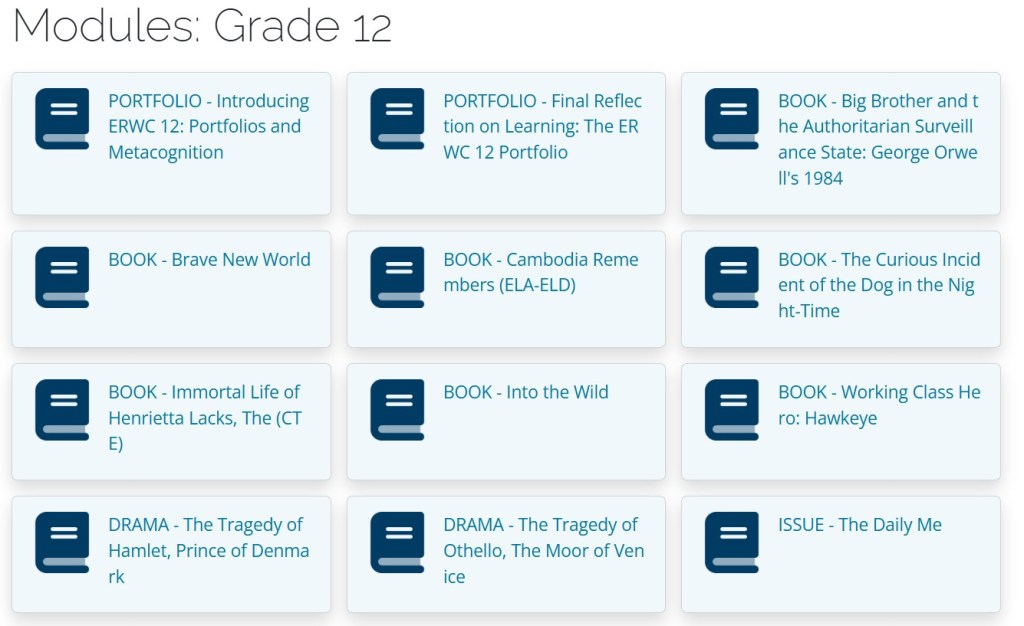
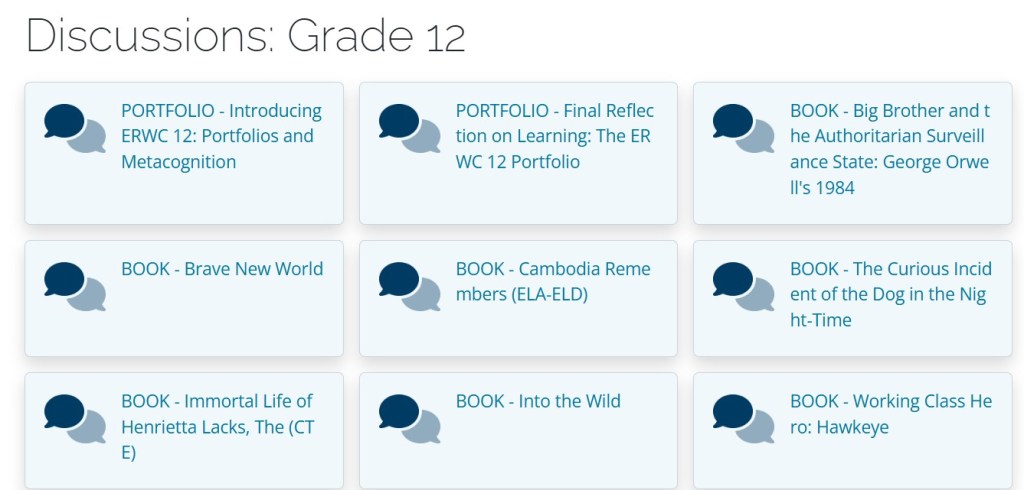
New Curriculum Buttons: Modules are now easier to navigate, making it easier to find the one you are looking for. They are listed alphabetically by groups: Portfolio, Books, Dramas, and Issues.

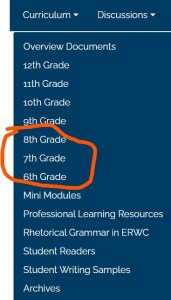
New Middle School Modules: Modules for grades 6-8 are now available under the Curriculum tab.

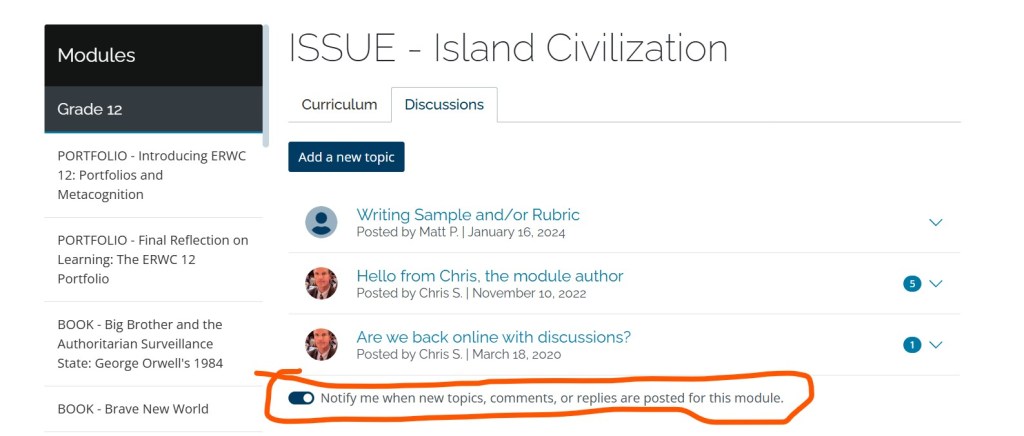
Discussion Boards: Like the modules, discussion boards have also received new buttons and are organized similarly to the modules. You can easily subscribe to any and all discussion boards. Subscribing to discussion boards will prompt notifications informing you of new posts. They are being monitored to make sure posts receive timely responses. Since the recent update, all subscriptions have been nullified. If you subscribed to any of the boards prior to December 9th, 2025, you will need to subscribe again. 

Within many discussion boards, you can find alternative sources, including suggested supplements, videos, and slide decks shared by your colleagues. You arenโ€™t teaching these modules in a vacuum! You have a community of teachers who can assist you in developing current, effective strategies for your classroom.

Teaching Resources: The list of teaching resources has been updated and includes many helpful documents, including helpful resources such as the โ€œHigh Impact Strategies Tool Kit to Support Students in ERWC Classrooms.โ€ This resource offers a range of activities for each area of the ERWC template that teachers can use to vary instruction in their classrooms.

Important reminder:

Materials published under ERWC are licensed to specific individuals and institutions that have adopted ERWC and have agreed to receive training in how to use them. You are reminded not to share these materials with colleagues who have not yet received ERWC training. Please also do not upload these materials to any online platforms that are not password-protected. 

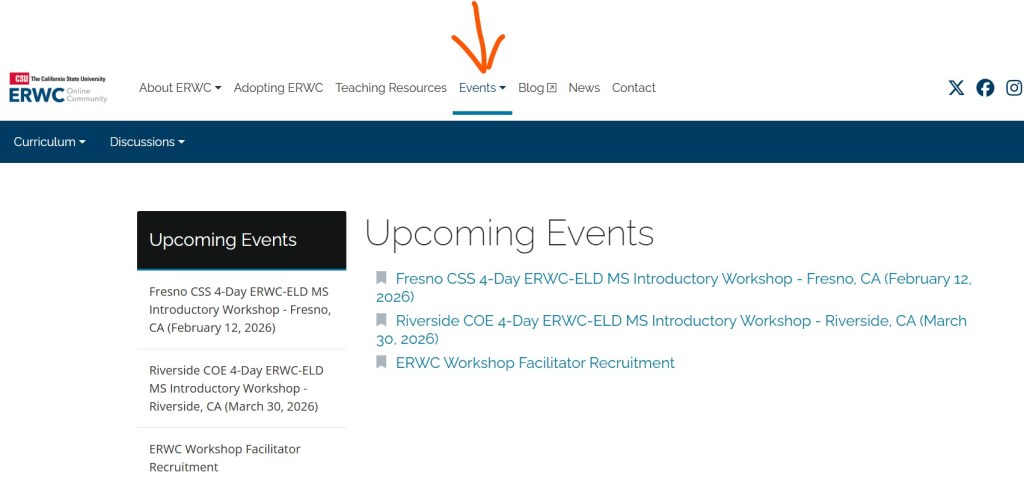
Throughout the year, numerous professional learning opportunities are available and can be found under the โ€œEventsโ€ link on the community website. Many of these sessions are open to educators who are not ERWC certified. Please encourage colleagues unfamiliar with ERWC to complete the free 24-hour professional learning required to access the curriculum and all areas of the ERWC website. Once completed, they will have full access to all materials.

Be sure to visit the updated community site today at https://writing.csusuccess.org/

Extending the Pipeline: The ERWC-ELD Middle School Curriculum

By Robby Ching and Debra Boggs

  • Should technology be used as a solution to problems in nature?
  • What are some dangers of the metaverse, especially for young people?
  • What are the stories only I can tell the world? 
  • How is plastic pollution affecting us and our future as individuals, communities, and globally?
  • What is the role of a citizen in addressing the wrongs of their government? 
  • How can words and images work together to communicate information or tell a story?
  • How can stories help us deal with the problems we are facing?

These are a few of the compelling questions that students grapple with as they read, discuss, and view the texts that form the basis for the new ERWC-ELD middle school modules. The modules guide students in reading complex texts across a range of genres, including novels, memoirs, graphic novels, TED Talks, interviews, and articles.

These modules are being rolled out on June 23 at the ERWC Literacy Conference in Long Beach. After that, they will be available to teachers across the state who have participated in professional learning to guide their implementation.

These modules implement the vision of the California Framework for English Language Arts (ELA) and English Language Development (ELD) and support teachers in creating instruction that meets the California Common Core Standards (CCCS) and the California ELD Standards. The modules are designed for ELA with Integrated ELD classes linked to Designated ELD classes but are adaptable for ELA only or ELD only classes. They are also intended to be customized depending on the teaching situation and the place students are in their literacy development.

The modules include whole books and shorter texts that raise complex issues and employ complex language. Recognizing that students require guidance and support as they learn to make meaning of these texts, module writers have built in a variety of scaffolds to ensure that all students, including English learner (EL) students, build their reading stamina and productively with the texts that are central to the modules. Students practice applying the strategies of expert readers to understand and analyze these texts and then create texts of their own, producing many of the genres they have experienced as readers. They collaborate to produce a TED Talk, write a micro-memoir, produce a slide show with presenter notes, deliver a speech at a climate summit, and create an infographic.

The language-focused activities in the modules foster English Learner (EL) and Multilingual Learner (ML) studentsโ€™ understanding of how English works at the word, phrase, clause, and text level while supporting disciplinary literacy growth for all students. The language-focused instruction is offered in the context of the texts students are reading as they participate in engaging and collaborative activities. Many activities implement high-impact strategies that have been shown to be especially effective in this literacy development, building studentsโ€™ awareness of how writers and presenters make choices about the language they use depending on who their intended audience is and how they hope to impact that audience.

Analyzing Mentor Texts

As they experience these modules, middle school students are introduced to the foundation of a rhetorical approach to reading, writing, and language. As part of this approach, in each module, students analyze mentor texts that model the form, the rhetorical strategies, and the language required by the culminating task. During this analysis of mentor texts, students develop a shared understanding of what is required for a specific kind of text to be successful. The teacher provides or they work together to create success criteria they can use to guide their drafting, and which can be used for peer feedback as well as grading.

Although each module reflects the expertise of its individual writers, they take a common pedagogical approach reflected in โ€œEssential Pedagogies for Integrated and Designated English Language Development in ERWC,โ€ available in the ERWC Online Community. Best practices for English Language Development suggest that students learn best by collaborating with other students, an understanding reflected in the California ELD Standards. The ERWC-ELD middle school curriculum assumes student-centered classrooms where students are constantly interacting with each other around the texts and tasks of the modules.

These modules do not make up an entire curriculum.  Including assignment sequences from textbooks or other sources will be needed to create a full year-long curriculum. But the rhetorical approach embedded in these modules enables middle school teachers to apply a similar approach to all the texts they teach. The High Impact Strategies Toolkit, available on the home page of the ERWC online community, provides a rich source of proven protocols to craft instruction, following the full ERWC arc from the professional text to the student text, and from rhetorical reading to rhetorical writing.

Experiencing these ERWC-ELD modules in middle school invites students to cross the threshold to becoming rhetorical readers and writers as they discover that writers create texts in particular contexts, for particular audiences to achieve particular purposes. These students will leave middle school having acquired a portfolio of reading and writing strategies to apply in their high school ERWC classes, in other academic classes, and in the wider world.

Works Cited

California Department of Education, California Common Core State Standards: English Language Arts & Literacy in History/Social Studies, Science, and Technical Subjects. Sacramento, CA: Adopted by California State Board of Education August 2010 and modified March 2013.

California Department of Education (CDE), California English Language Development Standards: Kindergarten Through Grade 12. Sacramento, CA: Adopted by California State Board of Education November 2012, CDE 2014.

Fletcher, J. (2015). Teaching arguments: Rhetorical comprehension, critique, and response. Portland, ME: Stenhouse Publishers.

The Expository Reading and Writing Course, 3rd ed. (2019). California State University Press. Long Beach CA.

–Katz, M., Graff, N., Unrau, N., Crisco, G., and Fletcher, J. โ€œThe Expository Reading and Writing Course (ERWC) Theoretical Foundations for Reading and Writing Rhetoricallyโ€ (2020).

–Ching, R., (2021). โ€œEssential Pedagogies for Integrated and Designated English Language Development in ERWC.โ€

— Arellano A., Ching, R., Boggs, D., and Spycher, P. (2021) โ€œThe High Impact Strategies Toolkit to Support Students in ERWC Classroomsโ€ in The Expository Reading and Writing Course (3.0). California State University Press. Long Beach CA.

About the Author:

Debra Boggs is a retired educator. She taught high school English and worked as a school and county office administrator. She is a member of the ERWC Steering Committee and part of the leadership team that created ERWC-ELD modules for grades 9-12. She is also currently a member of the team that created the new ERWC-ELD middle school modules for grades 6-8. 

Roberta Ching is a Professor Emerita in English at California State University, Sacramento. She coordinated the English as a Second Language program at CSUS before becoming chair of the Learning Skills Department. She was a member of the original 12th Grade Task Force and is currently a member of the team that created the new ERWC-ELD middle school modules for grades 6-8. She serves on the ERWC Steering Committee.


To learn more about ERWC or how to access this free curriculum, please visit https://writing.csusuccess.org/.

Editorโ€™s Note: The 2025 ERWC Literacy Conference will be June 23rd in Long Beach, California. Our theme this year is โ€œLeaning into Liminality: A Return to Language, Wonder, and Inspiration.โ€ Registration is free! Please visit the ERWC Online Community for more information.