
Community News

The current image has no alternative text. The file name is: lori-campbell-e1767818164266.png

By Lori Campbell

You may not realize that our online community resource just received a facelift! Have you seen it this year? Our online community is your one-stop shop for modules, teaching resources, and ideas from colleagues. https://writing.csusuccess.org/
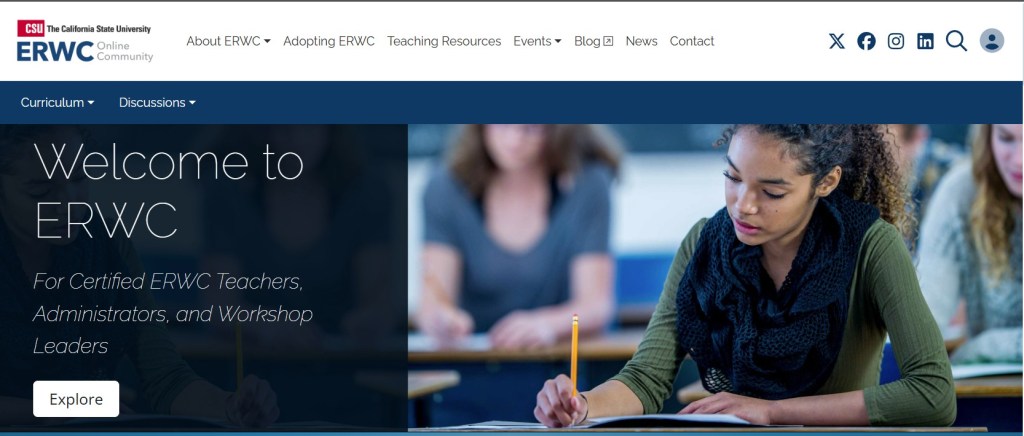

What’s new?

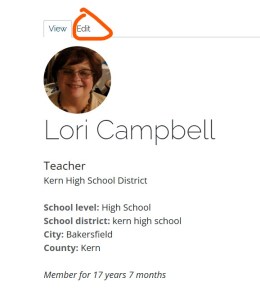
Member Information: You can now update your school site, email address, and password. Just select “My Account” on the right and then click the “edit” tab to change information. Make sure you provide current information to receive bulletin updates.
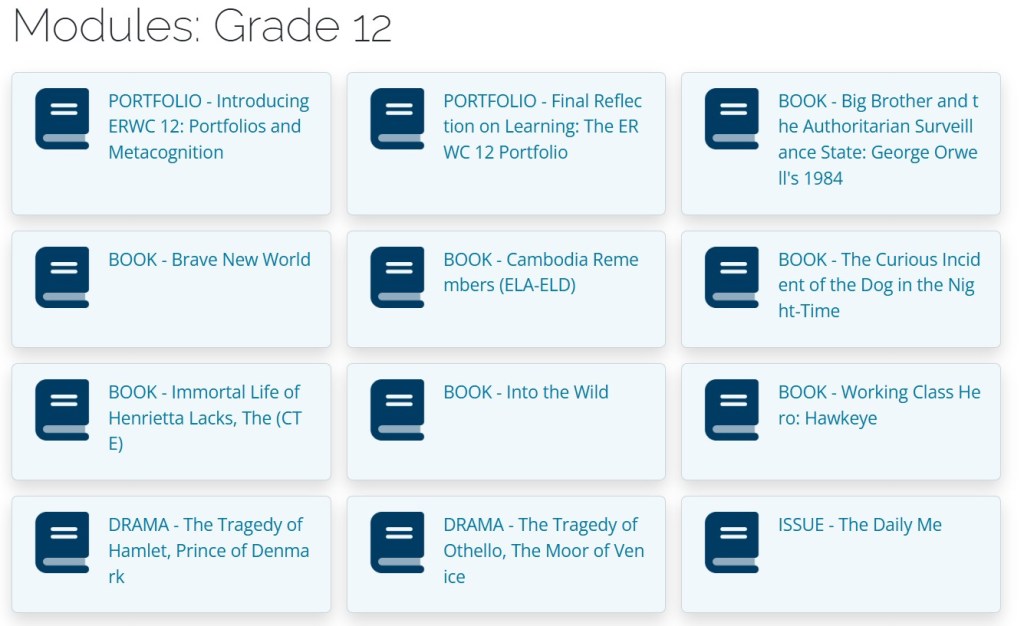
New Curriculum Buttons: Modules are now easier to navigate, making it easier to find the one you are looking for. They are listed alphabetically by groups: Portfolio, Books, Dramas, and Issues.
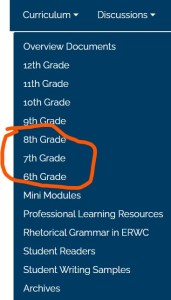
New Middle School Modules: Modules for grades 6-8 are now available under the Curriculum tab.
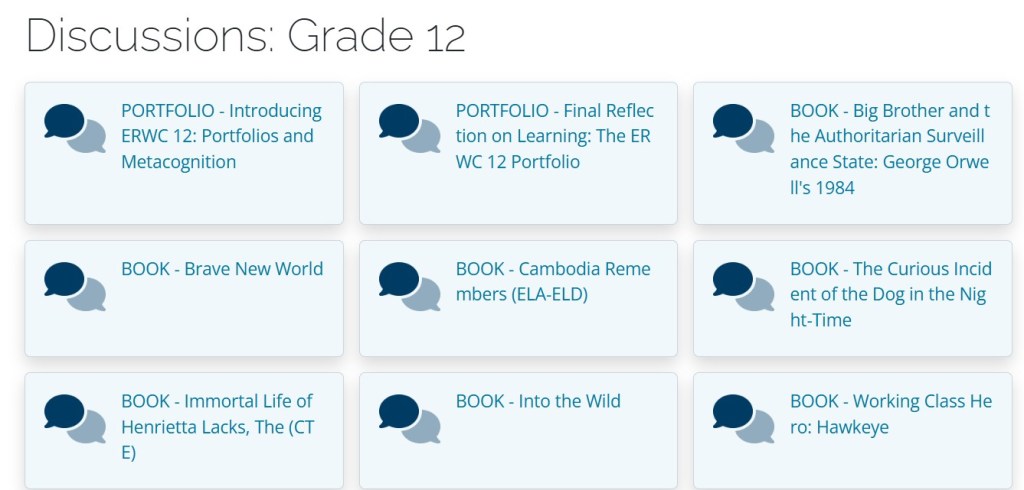
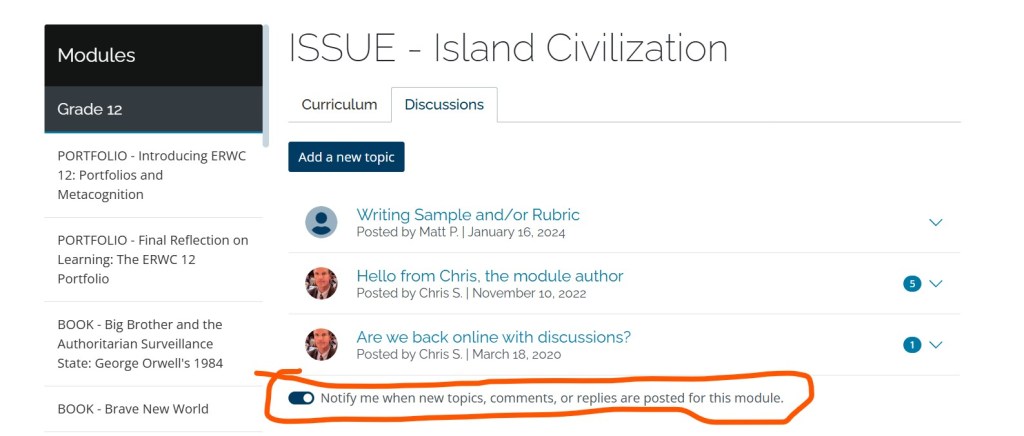
Discussion Boards: Like the modules, discussion boards have also received new buttons and are organized similarly to the modules. You can easily subscribe to any and all discussion boards. Subscribing to discussion boards will prompt notifications informing you of new posts. They are being monitored to make sure posts receive timely responses. Since the recent update, all subscriptions have been nullified. If you subscribed to any of the boards prior to December 9th, 2025, you will need to subscribe again. 

Within many discussion boards, you can find alternative sources, including suggested supplements, videos, and slide decks shared by your colleagues. You aren’t teaching these modules in a vacuum! You have a community of teachers who can assist you in developing current, effective strategies for your classroom.
Teaching Resources: The list of teaching resources has been updated and includes many helpful documents, including helpful resources such as the “High Impact Strategies Tool Kit to Support Students in ERWC Classrooms.” This resource offers a range of activities for each area of the ERWC template that teachers can use to vary instruction in their classrooms.

Important reminder:

Materials published under ERWC are licensed to specific individuals and institutions that have adopted ERWC and have agreed to receive training in how to use them. You are reminded not to share these materials with colleagues who have not yet received ERWC training. Please also do not upload these materials to any online platforms that are not password-protected. 

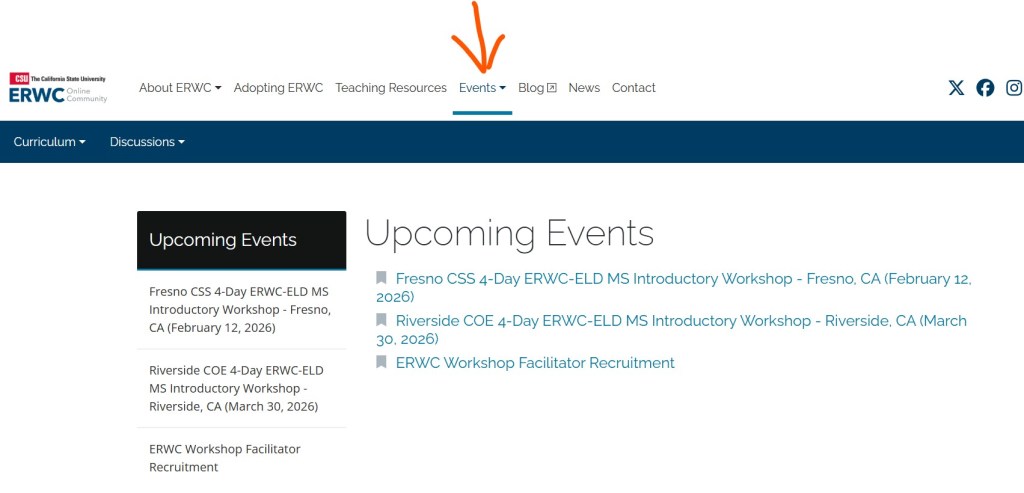
Throughout the year, numerous professional learning opportunities are available and can be found under the “Events” link on the community website. Many of these sessions are open to educators who are not ERWC certified. Please encourage colleagues unfamiliar with ERWC to complete the free 24-hour professional learning required to access the curriculum and all areas of the ERWC website. Once completed, they will have full access to all materials.
Be sure to visit the updated community site today at https://writing.csusuccess.org/


Getting Ahead of Falling Behind

By Carol Jago

Carol Jago

In a recent poll by Common Sense Media, 59% of teenagers said that online learning is “worse” than in-school learning. Although it is always difficult to know what students mean by “worse” and “much worse,” it seems they prefer learning in-person to learning on a screen. Along with missing the social aspects of school, 61% of respondents report that they are worried about falling behind academically.

I wondered how these students calculated what it meant to “fall behind” and how many of them were doing anything on their own to prevent academic stagnation.

I don’t want to pretend that many students possess the creative genius of Pratchett or Westover’s tenacity, but I do believe students’ capacity for independent learning can be and needs to be nurtured.  Too many teenagers equate learning with seat time, believing that as long as they take the quizzes, turn in the papers, and earn credit for a course, they are acquiring an education. Unfortunately, we teachers are substantially responsible for this false assumption. When all we demand is compliance, students fail to develop the intellectual muscles they need to learn on their own.

An autodidact is a person who is largely self-taught. Such individuals typically possess an enormous thirst for learning and often find school tedious, confident as they are in their ability to learn on their own. Terry Pratchett, whose fantasy novels have sold over eighty-five million copies never attended university and said he felt sorry for anyone who had. Ray Bradbury insisted that his education took place in the library reading, reading, reading. The late great playwright August Wilson dropped out of school in ninth grade but continued to learn by spending long hours reading in the Pittsburgh public library. And then there is Tara Westover’s story from Educated.

What if the educational chaos of the current school year could be turned to education’s long-term advantage? What if we embraced the goal of building students’ independent learning muscles? What if students began to realize that they actually enjoyed reading about what interested them? What if they felt the desire to write about what they were reading? You probably think I am in cloud cuckoo-land, but we find ourselves in circumstances ideally suited to independent study.

I have always found that when students want or need to know something their inner autodidact springs to life. Consider the technological skills today’s teenagers possess, the complicated video games they play, the song lyrics they know by heart, none of which they learned in class. Students are able. They are just not practiced at initiating the process of learning when it comes to schoolwork. Let’s turn the tables on young people worried about falling behind by challenging them to accept responsibility for their own education.

Resources for organizing an inquiry-based classroom abound, but maybe the simplest and best approach is to ask:

  • What do you want to learn?
  • How can I help?

At a time when traditional classroom protocols seem to be in constant flux, let’s work toward nurturing the autodidact within ourselves and in our students. Learning shouldn’t stop when the bell rings or the Zoom meeting ends.

Carol Jago is a long-time high school English teacher and past president of the National Council of Teachers of English. She is the author of The Book in Question: Why and How Reading Is in Crisis. You can contact her at cjago@caroljago.com.