Upcoming ERWC Webinar with Antero Garcia!


Editorโ€™s Note:
 ERWC is delighted to announce a free webinar with Antero Garcia on Thursday, January 18th at 4:30 pm PST. Antero is an Associate Professor in the Graduate School of Education at Stanford University and Vice President of the National Council of Teachers of English. A former English teacher at a public high school in South Central Los Angeles, Antero’s research explores the possibilities of speculative imagination and healing in educational research. He has authored or edited more than a dozen books about the possibilities of literacies, play, and civics in transforming schooling in America. His new book, co-authored with Ernest Morrell, is Tuned-In Teaching: Centering Youth Culture for an Active and Just Classroom.

Register for Antero’s webinar here.


By Chris Lewis, Ph.D.

In 2015, I was deep in my dissertation research, floundering in theory about utopian philosophy and feverishly re-reading M.T. Andersonโ€™s brilliant young adult novel Feed.

As part of my study, I was working with a group of high school seniors reading dystopian novels and talking about youth civic engagement and participation in resistance movements. There had been an increase in dystopian fiction being published for young readers, and I wondered what they were thinking when young characters overthrew the oppressive systems in their respective societies.

I was fortunate to come across Antero Garciaโ€™s (2013) Critical Foundations in Young Adult Literature: Challenging Genres, where he discussed an essential element in all of young adult dystopian (also a feature of many fairy tales) where the adults/parents are incapable of maintaining the society they built. Antero argued,

“It is a powerful transfer of responsibility found in these books: adults cannot rectify the past nor can they correct the future. It is up to the students in our classrooms-the students reading these books-to transform society for the better. YA, then, if we are to look for a unifying message across the books, is about teaching youth to grow up and own the future.”

(Garcia 133)

The youth participants in my study agreed with Anteroโ€™s assessment throughout their own reflections, noting how the effect of youth-led movements would lead to a more inclusive future and how contemporary classrooms may not be preparing them for this important work. 

In the years since my defense, where Antero was a member of my dissertation committee, his scholarship has focused on the importance of youth voice, civic engagement, and humanizing education. His writing continues to inspire me and helps me think through the complexities educators face when youth express their disillusionment in turbulent political times. I am constantly reminded how, without constant reflection on pedagogy and practice, educators might inadvertently disempower youth through our curricular choices or the systems we put in place. 

We need more classrooms to be spaces of incubation where our studentsโ€™ ideas, however outlandish they may seem through an adult lens, have space to grow and flourish. And while there will be times where youth feel helpless and fearful, there is power in radical hope. Anteroโ€™s research provides essential practices where teachers and students can engage in this kind of learning that just might change the world for the better.

Interested in some more reading on these topics, check out:

Cammarota, J., & Fine, M. (2008). Revolutionizing education: Youth participatory action research in motion. New York, NY: Routledge.

Freire, P. (1998). Pedagogy of freedom: Ethics, democracy, and civic courage. Lanham, MD: Rowan & Littlefield Publishers.

Hogg, L., Stockbridge, K., Achieng-Evensen, C, & SooHoo, S. (2021). Pedagogies of with-ness: Students, teachers, voice and agency. Myers Education Press.

Mirra, N., & Garcia, A. (2023). Civics for the world to come: Committing to democracy in every classroom. W. W. Norton.

Mirra, N., Garcia, A., & Morrell, E. (2016). Doing youth participatory action research; Transforming inquiry with researchers, educators, and students. Routledge.


Chris Lewis is a TOSA supporting ELs and a part-time lecturer for a graduate education program. He also serves as the ERWC Social Media Coordinator. His publications include two chapters in Pedagogies of With-ness : Students, Teachers, Voice and Agency: “Who is Listening to Student?” and “Finding Hope Through Dystopian Fiction.” You can follow Chris @chrislewis_10.


Save the Date!

The 2024 ERWC Literacy Conferences will be held June 17 in Northern California and June 25 in Southern California. Please make your calendar. All are welcome!


ERWC 2023-24 Literacy Webinar Series:

In the Classroom

All webinars are scheduled for 4:30 pm on a Thursday. Registration is free. Connect with your ERWC colleagues, enjoy top-quality professional learning, and hear ERWC updates.

Antero Garcia: January 18, 2024 at 4:30 pm PST

“Building Student Engagement”

Does your classroom ever feel stuck, or out-of-tune? Meaningful teaching is something educators strive for each day. Educators also know that there is no such thing as a perfect classroom. Despite our best intentions, our classrooms sometimes feel like they’re stuck, or out of tune. In this webinar, Antero Garcia will explain why we should allow students to play an integral role in turning classrooms into spaces for greater engagement and innovation.

Troy Hicks: February 15, 2024 at 4:30 pm PST
โ€œTeaching with Technologyโ€

Interested in using technology more effectively in the classroom? In this webinar, Troy Hicksโ€“an ISTE Certified Educatorโ€“will introduce โ€œdigital diligenceโ€โ€“an alert, intentional stance that helps both teachers and students use technology productively, ethically, and responsibly. Hear his strategies for minimizing digital distraction, fostering civil conversations, evaluating information on the internet, creating meaningful digital writing, and deeply engaging with multimedia texts.


Looking for an ERWC Workshop?

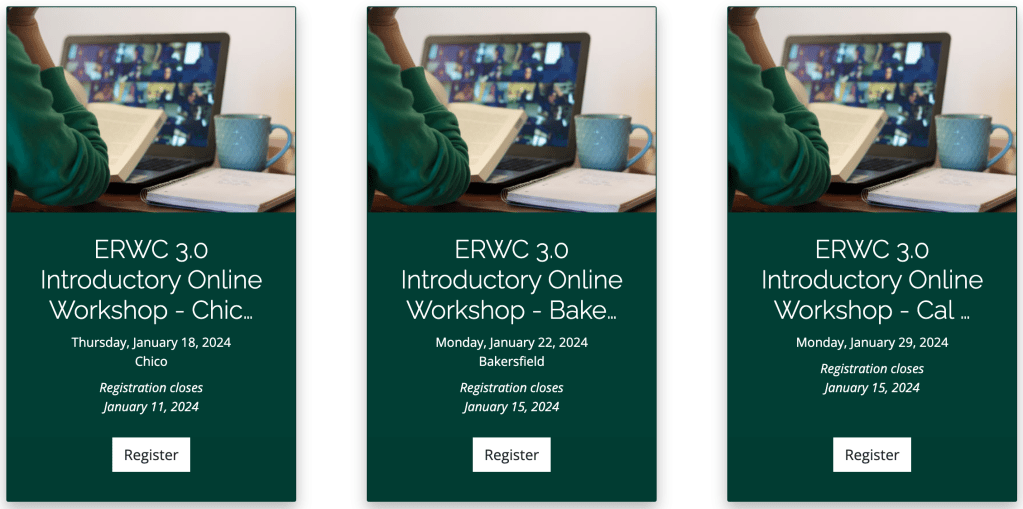
Find upcoming in-person or virtual ERWC professional learning sessions. ERWC workshops are free to teachers in California!
Please contact Dr. Lisa Benham at lbenhan@fcoe.org for information on ERWC professional learning services outside of California.

The Bias that Divides Us

Review of Get Free: Antibias Literacy Instruction for Stronger Readers, Writers, and Thinkers by Tricia Ebarvia

By Carol Jago

Are you looking for a book to spark fresh conversation in your English Department or PLC? Tricia Ebarvia invites readers to reexamine many practices that we take for granted as beneficial. For example, asking us, many of whom give up every lunch hour and stay long after school to help students, โ€œWhom are we not helping?โ€ That question hit me hard.

Every assertion Ebarvia makes is supported by research. She cites Daniel Kahnemanโ€™s work in Thinking, Fast and Slow in which the eminent psychologist describes experiments where he demonstrated how people were disproportionally and unknowingly influenced by a single piece of information, often the first piece of information presented given to them to solve a problem. I could not help but think about assumptions I had made about students that deserved much greater attention. I know you are thinking about how you have 36 kids in your fifth-period class and a student load of 180, but that doesnโ€™t change what individual students deserve. Ebarvia asks, โ€œHow many troublemakers are simply students who are least like us?โ€

Along with posing questions that challenge the status quo, the book offers an extraordinary list of essays to use as mentor texts for student writing. The extensive list is organized by topics such as: Our Bodies, Ourselves (โ€œThe Clan of the One-Breasted Womenโ€ by Terry Tempest Williams), Falling in Love (โ€œWhat We Hunger Forโ€ by Roxane Gay), and What Keeps You Up at Night (โ€œDifficult Girlโ€ by Lena Dunham). Ebarviaโ€™s suggestions are excellent and abundant. This is a treasure trove for anyone looking to refresh curriculum.

Art by Gian Wong

A fascinating feature of the book is the authorโ€™s note on the artwork that appears throughout the text. The artist Gian Wong designed patterns and images inspired by traditional ethnic textiles and Filipino culture. On many pages Maya birds, indigenous to the Philippines, break free in flight.

Get Free is also a practical guide for supporting students as they encounter rich, challenging texts, discovering along the way what they have to say about the provocative ideas of others. A chapter on classroom discussion, โ€œSetting the Table for Radical Openness in Our Conversation,โ€ offers suggestions for navigating choppy waters. I predict that this book will disrupt how you think about your work with students. It did for me.

“The Philippine Sun” by Gian Wong. Description from Get Free: The Philippine sun (“araw”) symbolizes the spark and light in each individual that makes them unique.

Carol Jago is a long-time high school English teacher and past president of the National Council of Teachers of English. She is associate director of the California Reading and Literature Project at UCLA and serves on the International Literacy Association board of directors. She is the author of The Book in Question: Why and How Reading Is in Crisis and can be reached at cjago@caroljago.com.

Editor’s Note: If you’ll be traveling to Columbus, OH for the 2023 NCTE Convention, you can see Carol Jago in person at her session on Friday, November 17th at 2:00 p.m.


Please see the recording of Tricia Ebarvia’s webinar for the ERWC Community from 2021 for more information on antibias literacy instruction. You can find the recording in the ERWC Webinar Series.

The next ERWC webinar will be Thursday, November 16th at 4:30 p.m. Pacific Time with Marc Watkins, a leading researcher in classroom applications for generative AI. Marc is an academic innovation fellow at the University of Mississippi. In this special webinar, Marc will explore best practices in teaching students AI literacy, AI assistance, and AI aptitude. Registration is free.

We Are Not Immune


Editorโ€™s Note
:ย This month weโ€™re featuring previews of sessions from California State Universityโ€™s upcomingย ERWC Literacy Conference. ERWC teacher and workshop leader Frank Mata is presenting June 21 in Southern California and June 27 in Northern California.

By Frank Mata

โ€œToo Dope Teachers and a Micโ€ podcasters (@toodopeteachers) recently tweeted โ€œHow do yโ€™all think about folx who you thought were dope, then did real harmful things? Not imperfections, not just being flawed, but actual harm?โ€ย 

Their question made me think about how teachers, specifically English language arts teachers, truly have the delicate burden of balancing between an unconscious reinforcement of dominant oppressions and the liberation from it. Big, big thoughtsโ€ฆ I know. But we are about to be at a literacy conference. How can we not think about this given the social unrest from our continued and historical American racial reckoning?ย 

When thinking about this yearโ€™s upcoming ERWC Literacy Conference, I am struck with the potential opportunity we teachers have because we are facilitators of the spaces where transition and progress for our immediate society can form. This June, we get to actually look at one another, face-to-face, and dialogue about whether we are contributing to what we say we do. We say we nurture student voice. We say we provide space for young people to find and develop their own interests. We say we help strengthen their literacy and ability to communicate in a variety of contexts and audiences. We say, we say, and we sayโ€ฆ

Dr. April Baker-Bell, author of Linguistic Justice, will be the keynote speaker at the 2022 ERWC Literacy Conference.

We say a lot of things.

And though I am absolutely honored to have been invited to speak about our roles as ELA teachers, specifically through the discussion of the existing 12th grade module Language, Gender, and Cultureโ€ฆat a โ€œliteracyโ€ conference, I also come with a real-time on-going attempt at understanding this shared burden–our shared burden. At the same time, I am especially excited to be in Dr. April Baker-Bellโ€™s audience because I believe she will ask the same questions we ELA teachers are faced with: Whose literacy are we teaching?

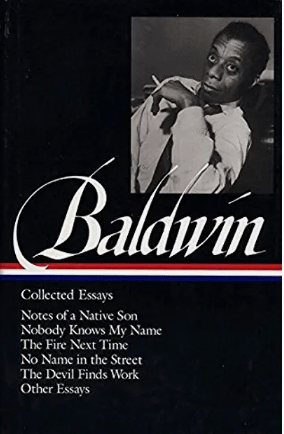
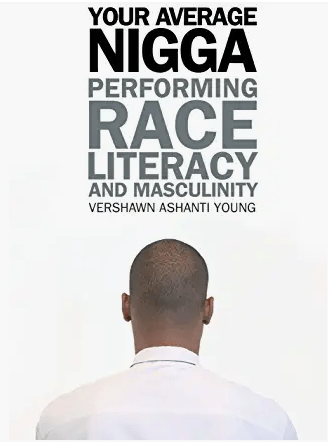
I come to this conference to find community with folks who understand (or are trying to) the nuances and layers infused within the concept of gender, literacy, and racial performativity. After reflecting about both the module and ERWCโ€™s new Theoretical Foundations, this June I aim to unpack how we might not just be reinforcing dominant norms, but also harming young folks through what author Clint Smith refers to in his New Yorker essay as the โ€œideology [of white supremacy].โ€ I am inspired by James Baldwinโ€™s speech โ€œA Talk to Teachersโ€ that challenges all of us, specifically teachers, to inspect and confront how we are accomplices to harming these young people. I draw inspiration from Dr. Vershawn Ashanti Youngโ€™s LGC module text โ€œThe Barbershopโ€ because of its examination of how we all perform gender, intellect, and even race. I still wrestle with Dr. Judith Butlerโ€™s challenge for both students and teachers to examine โ€œthe relation between complying with gender and coercion.โ€ย 

At my presentation I aim to unearth the hidden areas that affect this delicate discussion. I want to know how our own social positionalities (social identities) affect the dissemination, facilitation, and delivery to our economically, ideologically, and socially diverse student bodies. Does the discussion of dr. vayโ€™s โ€œBarbershopโ€ hit differently when coming out of the mouth of a white woman? Do male teachers of color showcase an appropriate delicacy when fostering discussions about gender performances? Do we teachers actually have the intellectual capacity to see that our own literacy performance can stifle the transference of knowledge gained from these pieces?ย 

We are not immune to the cold questioning from Butler, Lourde, Shira, Brooks, or Young. We are not immune to Baldwinโ€™s criticisms of solidifying the existing and malignant racial gaps of our society. But we are capable of hard self-examination. We are capable of confronting our own dependence on these social performances. We are capable of authentically conferencing about what the state of literacy development is in our classrooms. And hopefully, we can be capable of undoing the harms we give from our unconscious reinforcement and protection of our static identities. 

Frank Mata has been in the classroom for eighteen plus years. His current project is developing an ELA 12th grade course focusing on social justice and equity. He teachers at Eleanor Roosevelt High School in Eastvale, CA.

Using Antiracist Reading Practices to Help Writers Engage in Meaningful Revision

By Dutch Henry

In a recent meeting of English teachers one of my colleagues asked, โ€œWhat are the things you see from students that make you say โ€˜oh no, not this again?โ€™โ€ Over the laughter, one of the other teachers said, โ€œA โ€˜revisionโ€™ that is the same as the previous draft. I try so hard but I just canโ€™t get my kids to revise. They feel so good about finishing something that they donโ€™t want to keep working on it. They have so much to say and so much greatness in them, I wish I could get them to revise.โ€ The chorus of agreement was so loud I had to turn down the volume in the Zoom meeting.

I think about this lament a lot and I always come back to what Iโ€™m doing to help my students meaningfully engage in revision. Iโ€™ve tried many different approaches over the years, but without much success. Finally, though, Iโ€™ve found that what works best isnโ€™t about me at all. In some ways, itโ€™s not about the writers either, itโ€™s about their readers. Student writers care about the views of their peer readers in ways that are profoundly different than the way they care about me, the teacher-reader. 

In  Asao B. Inoueโ€™s โ€œTeaching Antiracist Readingโ€, he advocates for antiracist reading practices that โ€œask [readers] toโ€ฆinvestigate the deep and hidden structures that make up their personal reading habits, personal reading habits that are also structural and social.โ€ The varied practices Inoue outlines in the essay involve a series of steps that boil down to two core elements. First, Inoue asks readers to pause while they are reading and ask โ€œWhat am I feeling right now reading this text? Why am I feeling that? What in the text did that to me?โ€ Next, readers ask themselves โ€œWhere in my world do I get the ideas that help me respond this way? Where do those habits come from?โ€ Using these two steps in the process of peer review can help readers engage with their fellow studentsโ€™ writing in ways that improves their reading process and provides feedback that inspires writers to revise.

Based on Inoueโ€™s ideas, I now ask readers in peer feedback to use these questions to share with their classmates how the writing made them feel and what specifically in the writing made them feel that way. Early in the process I support them with sentence prompts to make specific references to the writing. I also ask them to tell their fellow writers how their response to the writing relates to something in their life or experience. Writers, then, reflect on whether the response the reader shared is the one they were hoping for and how they might revise their writing to increase or alter the readerโ€™s experience. This can then lead to more detailed discussions about how to apply the key elements of rhetorical reading and writing in ERWC.

It may be our lament as teachers that students donโ€™t always reach the goals we set for them, but maybe itโ€™s the โ€œweโ€ in that process that is the problem rather than the students. If we focus on what students are already doing and can do well, we can see them reach goals we hadnโ€™t even anticipated for them. If we turn the experiences of reading and writing over to the students more fully we may find that they reach their own goals, which may be even better than the ones we dream of for them.

Dutchย Henry teaches English at Shoreline Community College north of Seattle, WA. As the Higher Education English Lead for the Bridge to College Project in Washington, he has partnered with ERWC on module development, coaching, and professional learning.

Kicked Me in the Gut: Picked Me Back Up

By Meline Akashian

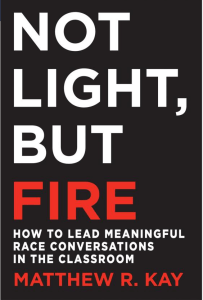
Maybe itโ€™s rude in a blog post to tell you to read something else, but here it is: read Matthew Kayโ€™s Not Light But Fire: How to Lead Meaningful Race Conversations in the Classroom.

And be ready. He says stuff like this:

Just as we cannot conjure safe spaces from midair, we should not expect the familial intimacy, vulnerability, and forgiveness needed for meaningful race conversations to emerge from traditional classroom relationships.

Frankly, thatโ€™s nothing compared to page twenty-seven. On page twenty-seven, my note in the margin is an expletive.

Thatโ€™s where Kay chronicles an informal conversation between his poetry club students in the immediate aftermath of Ferguson–or, more specifically, in the immediate aftermath of a black student suffering through a class discussion about Ferguson.  Kayโ€™s students offer raw revelation of what many students are probably thinking when teachers lead such discussions. 

My takeaways were layered, and they came in depressing waves, but here is a big one: Many kids wear masks during difficult classroom discussions. And during race conversations, some kids might wear the mask. Iโ€™m just going to leave that there for a second. For any teacher who wants to help students use their voices and activate their agency, itโ€™s a crushing thought. But letโ€™s be clear–the mask itself is not the problem. All of us disguise our vulnerabilities from most people, for good reason. All of us have public and private selves, and each of us alone decides who sees what. 

OK, so combine that reality with our reality, that nearly every ERWC module could be a touchy subject or tap into someoneโ€™s past trauma. ERWC teachers are routinely doing what Kay describes as opening โ€œacademicโ€ discussions around topics that are โ€œvisceralโ€ for some of our students. The whole course is designed around dialogue aimed at productive conflict.  But productive conflict requires openness and honesty.

For me, the practical implication is this: it doesnโ€™t matter if I think Iโ€™m an ally; it doesnโ€™t matter whatโ€™s in my heart; it definitely doesnโ€™t matter what I do with my free time; it doesnโ€™t even matter if my students love and respect me. What matters is that my students trust me with their bruised and battered insides. And trust not just me, but their classmates. Only then can I hope that students will decide, when they are ready, to be real–in front of me and everyone else in the room. 

Like–I was already a person who loses sleep the night before a touchy classroom discussion.  So around page twenty-seven, I was feeling pretty overwhelmed, doubting Kayโ€™s ability to offer a workable solution, particularly one for me, an especially private person myself. But then he got down to it.

His first chapter offers specific protocols to build a safe space. Three simple discussion norms and three routine activities honor students as individuals and develop a classroom culture devoted to building and maintaining relationships. They require class time and commitment, and perhaps a mild restructuring of the value system driving instructional decision-making.

His second chapter introduces discussion moves designed, not to eliminate conflict, but to help make conflict productive. For example, โ€œSurfacing the Conflictโ€: teachers figure out what category of conflict is at hand (around fact? process? purpose? values?) in order to determine their most useful next move directing discussion traffic. Iโ€™m pretty excited about this approach, because in an ERWC class, the rhetorical thinking involved with categorizing the conflict can be farmed out to students, giving me more time to figure out my next move. 

More value added in Chapter Two? It closes with protocols for discussion prep using hypothetical case studies. By imagining various scenarios, I can anticipate the more likely conflicts or diversions that could derail discussion and ready myself with some โ€œnext movesโ€ in advance. Then I can go to bed and actually get some sleep.

Though thereโ€™s 24k gold in the rest of Kayโ€™s book, Iโ€™ll start by trying to implement Chapters One and Two–or maybe just Chapter One.  Whatever my measured first step, Iโ€™m all in to take it. Because when studentsโ€™ sincere and passionate engagement with a topic is perceived as a risk, itโ€™s a gross, malignant irony. And because Matthew Kay shows us, guiding real talk about hard things isnโ€™t about being a natural-born Mr. Keating; itโ€™s about the groundwork we lay in advance and our ongoing commitment to the cause.

Meline Akashian is an experienced ERWC teacher with grades 7-12 and former Riverside County Teacher of the Year. She has co-written modules for ERWC and is a member of the ERWC Steering Committee.

Work Cited

Kay, Matthew. Not Light, But Fire: How to Lead Meaningful Race Conversations in the Classroom. Stenhouse, 2018.

Not My Power, Our Power: A Teacherโ€™s Response to Matthew Kayโ€™s Webinar โ€œHow to Talk About Race in Your Classroomโ€

โ€œIt is hard for a student to unlearn empathy, to forget discernment, to dismiss the importance of solid evidence once theyโ€™ve grown used to demanding itโ€ฆ if we are training the next generation of teachers, entertainers, lawyers, and politicians; if we are molding thoughtful citizens, wise counselors, and people of righteous passion; then our classrooms must be deliberate in their approach to conversations about race. The next generation needs to be far better at this stuff than we have been. They are coming of age in a world of artfully disguised injustices, most of which will stay both invisible and vicious if people never learn to learn to meaningfully discuss them.โ€

–Matthew Kay, author of Not Light, But Fire: How to Lead Meaningful Conversations about Race in the Classroom

By Frank Mata

It is clear that Matthew Kay is aware of the barriers that block educators from broaching race with both colleagues and students–fear of backlash, defensiveness, the potential re-traumatizing effect, โ€œnot knowing enough to foster discussion,โ€ or ultimately, a potential loss of professional standing. (There are so many โ˜น.)

In an hour-long professional development session recorded in 2016 (“How to Talk about Race in Your Classroom”), Kay first challenges listeners to identify exactly what it is that โ€œgets in the way.โ€ Immediately, he spotlights participantsโ€™ humility when asked of their fears. At that moment, I found this approach as defying conventional classroom power dynamics. Through a teacherโ€™s admission of humility, to not be the expert on race, this approach invites studentsโ€™ voices to be an added and authentic means of โ€œteaching the teachers.โ€ It showcases what โ€œassets-based teachingโ€ looks like. In the autonomy of our four walls, dare we welcome this while resisting the presumed duty of measuring studentsโ€™ responses?

The question then surfaces–are we, as teachers, ready to detach ourselves from the professional authority we hold in the classroom, the very entity that we often base our professional identity, our academic pride, or sense of intellectual security, in the manner that equalizes us with our students? Clearly, the culture of education does not promote such vulnerabilities, as evidenced in the presumptions of merit as associated with years taught, letters after our full name in our email signatures, or even our ability to cold-read aloud a poem with that academic accent juxtaposed to youth language.

The onus is within our position as facilitators, not teachers, when it comes to conversations about race. Matthew Kay introduces and implies to fellow facilitators, in the same inviting way we ought to embrace studentsโ€™ voices, experiences, and knowledge for all of us to learn from.

In order for the safe space environment to allow for this to happen, Kay highlights his three listening norms of the classroom: 1) to listen patiently, 2) to listen actively, and 3) to police [our teacher] voice. He concludes that through this purposeful structure of how to listen, โ€œit creates a built-in reflection space,โ€ which exposes to us how these norms create the culture of invitation for all of our vulnerabilities.

Hearing this specific tip creates a tangible skill-set for us not as teachers, but as fellow race-discourse participants, to authentically engage with each other. However, to do so, we teachers must be ready, willing, open, and secure enough to set free our conditioned, even mythical, sense of power when engaging in meaningful conversations about race. Though we might spend our own dollars, energy, or efforts in creating the literal learning environment to our tastes or liking, this same space is not exclusive or limited to our own platform. As teachers, our presence is not paramount.

Frank Mata has been in the classroom for seventeen plus years. His current project is developing an ELA 12th grade course focusing on social justice and equity. He teachers at Eleanor Roosevelt High School in Eastvale, CA.

Work Cited

Kay, Matthew. Not Light, But Fire: How to Lead Meaningful Race Conversations in the Classroom. Stenhouse, 2018.