
By Anne Portferfield
As you may have heard, there’s a new ERWC grant opportunity! Through the Education Innovation and Research grant, California State University is developing yearlong ERWC courses for grades 9 and 10, and high school English teachers will pilot them beginning in the 2025–26 school year.
I have begun meeting with teachers to discuss the grant opportunity, and some teachers are overjoyed that the new curriculum is on the way! One teacher noted that implementing the ERWC will ensure that grade 9 and 10 English courses are rigorous–which is essential in this post-pandemic era. Several teachers noted that the ERWC will prepare students for the Advanced Placement English Language and Composition Course.
Teachers also have questions. I’ll start with an easy one. Almost every teacher I’ve spoken with has the same question: What will the curriculum include?
Each grade will have two thematic pathways for teachers in the grant to choose from. The grade 9 pathways will be identity and civic engagement, and the grade 10 pathways will be community and communication. The pathways will include all of the same types of modules as are available at the upper grades (i.e., portfolio, mini, issue, book, and drama). All modules will have integrated and designated ELD embedded. After the grant, grade 9 and 10 ERWC teachers will have the same flexibility to create their own DIY course design as grade 11 and 12 ERWC teachers.

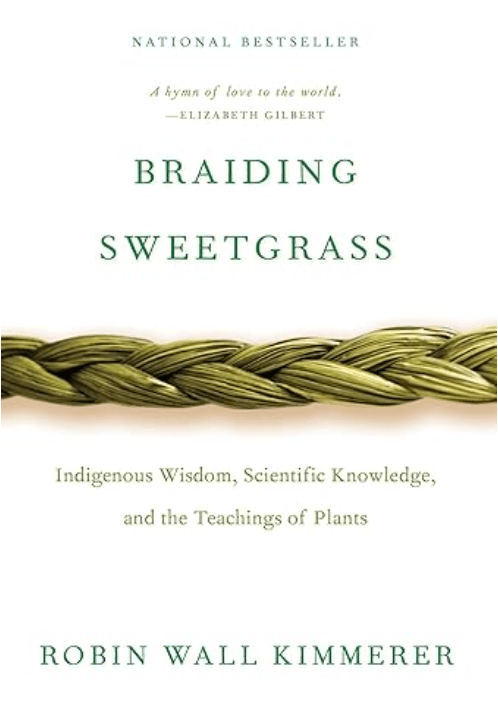
Yes, there will be a Romeo and Juliet module. No, you don’t have to teach it if you don’t want to! Some of the other texts being considered for the new curriculum include Born a Crime, Klara and the Sun, We Are Not Free, The Hate U Give, Funny in Farsi, Braiding Sweetgrass, Home is Not a Country, and Night. What the curriculum developers can guarantee is that texts will be highly engaging for students, which is a cornerstone of the ERWC.






Jennifer Fletcher, the Chair of the ERWC Steering Committee, shared, “The curriculum will be really good. We are going to be proud of it when we put it in front of teachers.”
Teachers also want to know what the professional learning entails. ERWC teachers will engage in 20-25 hours of professional learning every year they participate in the grant. Below are descriptions of the professional learning components of the grant:
- Summer workshops: ERWC teachers will attend a two-day summer workshop every summer they are participating in the grant. As a former teacher, I know that summers are coveted! If your school signs up for the grant, the Fresno County Superintendent of Schools will work with you to schedule the summer institute at a time that works well. The goal is for the workshops to be in-person, but there may be some virtual options.
- Coaching: ERWC teachers will be assigned a coach to be a thought partner. The coaches will be professors, literacy specialists, experienced ERWC trainers, etc. Teachers will engage in five coaching sessions, which will include a pre-conversation, a classroom observation, and a reflection conversation. The coaching sessions will not be evaluative, and no information will be reported back to your district.
- Community of practice meetings: ERWC teachers will attend five 1-hour community of practice meetings. These can take place at the school site during already-scheduled meeting time.
Teachers also have questions about stipends. As a former teacher, I remember spending countless hours doing work that I was not compensated for. We want teachers who are part of this grant to feel valued! Here’s more information about the stipends:
- Each ERWC teacher will receive $4,000 total–$2,000 for the pilot year and $2,000 for the evaluation year. If a teacher teaches the ERWC in both grades 9 and 10, they will receive $8,000 total ($4,000 per grade).
- Each traditional English teacher will receive $1,000 total during the evaluation year.
- Each school will identify a site lead, who will be responsible for communicating information about the grant. They will receive $3,000 total–$1,000 for each year of the study.
- The $20,000 school stipend is intended to be used to support ERWC teachers. In the past ERWC grants, schools have used this stipend to purchase copies of books for every student, pay teachers their hourly/daily rates for attending professional learning, provide subs for professional learning days, etc.
- Districts usually keep the $5,000 stipend to offset the cost of providing WestEd with student-level data.
The ERWC and traditional teacher stipends will be paid directly to teachers by WestEd. The site lead stipend will be paid directly to site leads by the California State University. The school stipend will be paid to the district, and the district will make the money available to the schools.
In addition to these stipends, schools and teachers also receive all the materials they need to implement the new curriculum, including class sets of books for book modules.
There have also been some questions about scheduling throughout the grant. Schools need the following teachers in place each year of the grant:
| 2025–26 | 2026–27 | 2027–28 | |
| Grade 9 | Pilot Year At least two teachers pilot the ERWC At least one teacher continues to use the regular curriculum | Evaluation Year The same two teachers as the previous year teach the ERWC At least one teacher continues to use the regular curriculum | |
| Grade 10 | Pilot Year At least two teachers pilot the ERWC At least one teacher continues to use the regular curriculum | Evaluation Year The same two teachers as the previous year teach the ERWC At least one teacher continues to use the regular curriculum |
And lastly, teachers want to know how they can sign their schools up for the grant. The first step is to meet with me! Please feel free to email me to set up a meeting (anne.porterfield@wested.org). We would discuss the details of the grant, and I would address any lingering questions. If it seems like the grant may work at your school, we would then share information about the grant with other teachers at your school, school administrators, and district administrators. If all parties agree to participate, then WestEd would set up a memorandum of understanding with your district.
You may also learn more about the grant in an upcoming webinar on Monday, October 21st at 4pm PT. You may register for the information session here.
Anne Porterfield is a Senior Program Associate with Research-Practice Partnerships. She serves as both a project manager and qualitative researcher for projects and evaluations.


 Teaching ERWC